Skip to main content
A recent conversation with David Eccleston on the Dalgety podcast started with a simple comparison.
We were talking about the price of medical cannabis and why products that are cultivated, handled and finished with greater care can cost more.
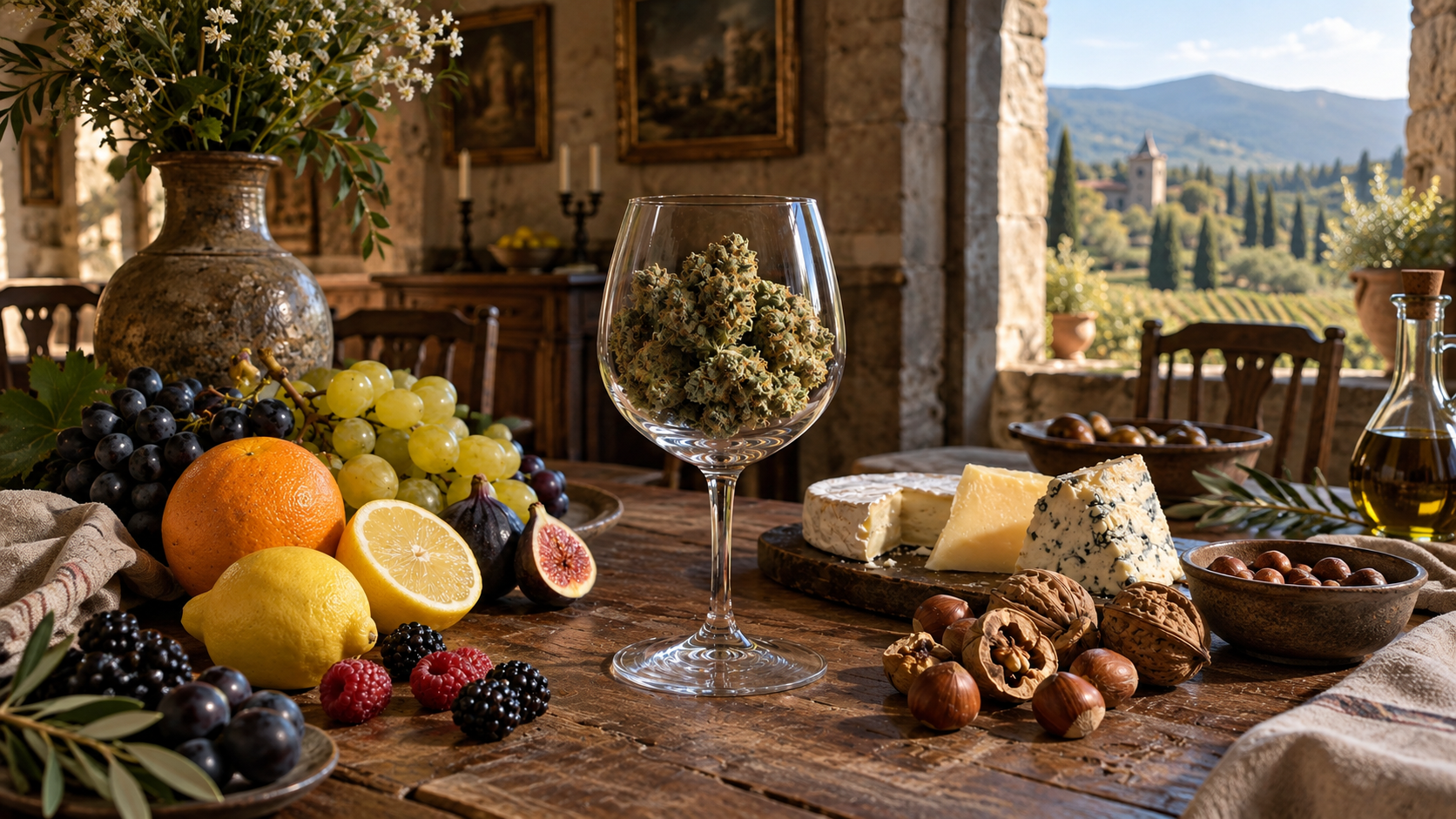
David compared it to wine; at one end of the spectrum, you have mass-produced bottles made at scale; at the other, you have wines that are grown, harvested and produced with far more attention to detail.
It was an interesting analogy, although one that only goes so far. Wine is a drink. Medical cannabis is a medicine, and the standards that sit behind each are fundamentally different.
But it did make me wonder where else useful parallels could be drawn.
In “What Does It Take To Build A Medical Cannabis Clinic?”, we touched on quality, patient expectations and the role of care throughout the process. That conversation led to another question, “could cannabis, like wine, sometimes reveal more of its character after it has been opened and given a little time?”.
Anyone who has opened a pack of cannabis and initially found the aroma muted will recognise the experience. A few minutes later, the profile can seem different. Something earthy becomes deeper. Something gassy becomes sharper. Citrus may move from a simple lemon note towards peel, zest or grapefruit. What first appeared quiet can become surprisingly expressive.
But is that just perception or is there science behind it?
The answer is that there is some science to support the idea, but we should be careful drawing too many comparisons between wine and cannabis, in spite of it being a language that a larger majority of the population are familiar with. Cannabis is a medicine after all, whereas wine is not.
Aroma lives in the headspace
When a sealed pack is opened, volatile organic compounds begin moving from the plant material into the air around it, what scientists call the headspace.
Research examining cannabis headspace has shown that the number of detectable volatile compounds can increase with sampling time. In one study, substantially more compounds were detected after longer periods than after only a few minutes, suggesting that the aromatic profile present in the surrounding air develops over time.
That helps explain a familiar sensory experience.
A flower may initially present one dominant note; perhaps something sharp, green or citrus-led, but after a short period in the open container, other characteristics may become easier to perceive.
The nose begins to find more detail. Something bright may reveal a sweeter edge. Something earthy may develop notes that feel woody, peppery or savoury. A gassy profile may move from simply pungent to something more layered; fuel, sulfur, spice, damp earth or even a faint tropical character.
The chemistry behind those impressions is more complicated than we once thought.
It is not just about terpenes
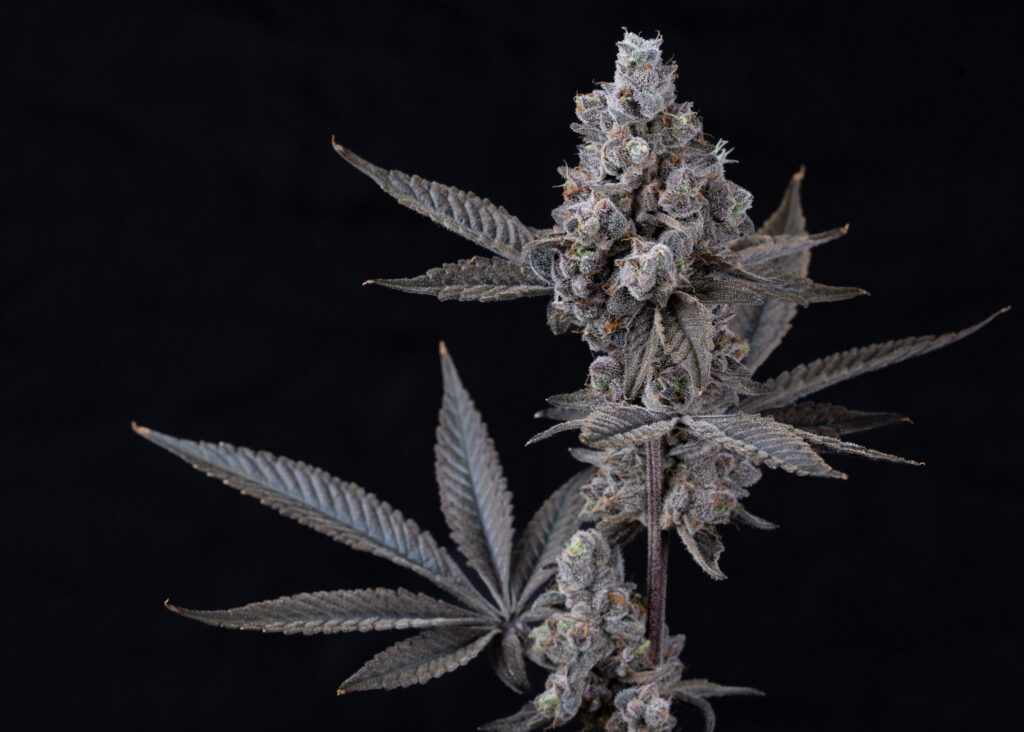
For years, cannabis aroma has been discussed largely through the language of terpenes, with Limonene being associated with citrus, Pinene with pine, Myrcene with earthy or herbal notes & Linalool with floral characteristics.
Those compounds unquestionably contribute to aroma, but they are not the whole story.
Recent research has shown that minor non-terpenoid volatile compounds can have an outsized influence on what cannabis actually smells like. These include volatile sulfur compounds, fatty acids and other molecules present at very low concentrations but with extremely low odour thresholds.
That means a compound does not need to be present in large quantities to dominate the nose. A useful analogy is perfume, as the ingredient present in the greatest concentration is not necessarily the one you notice first.
In cannabis, some sulfur-containing compounds have been linked to pungent, skunky, fuel-like and tropical-citrus aromas. Researchers have also identified compounds associated with savoury, cheese-like and chemical notes.
Interestingly, some of these same families of sulfur compounds are also found in grapes, wine, hops, grapefruit and passionfruit.
That is where the wine comparison becomes scientifically interesting rather than simply decorative and not because cannabis should be treated like wine, but because both contain complex mixtures of volatile molecules that interact with human perception in ways that cannot always be reduced to a simple list of major compounds.
The certificate cannot tell you exactly what something will smell like
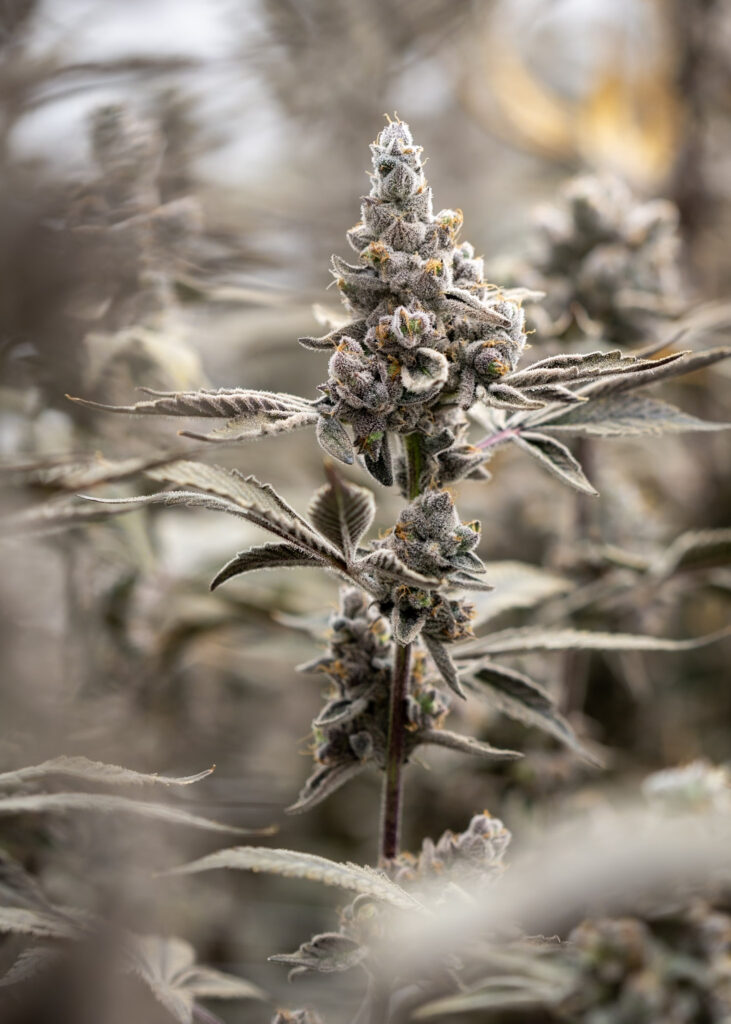
This is perhaps the most important point. A terpene analysis can tell us something useful about chemical composition, however it cannot necessarily tell us what the human nose will perceive.
A 2025 sensory study examining 91 cannabis samples found that terpene profiles alone were poor predictors of perceived aroma. The researchers identified 25 distinct sensory descriptors, including citrus, fruity, candy-like, skunky, musty and animalic characteristics, but found only limited direct relationships between terpene composition and the way people actually described the samples.
This should make us cautious about reducing aroma to statements such as:
“High limonene means citrus.”
Sometimes it may, but sensory perception is the result of a much more complicated mixture of compounds, concentrations, thresholds and interactions. The aroma profile is an orchestra, not a soloist, similar to what David shared during the podcast.
Why some profiles may feel slower to reveal themselves
This is where we need to distinguish observation from evidence. It is entirely plausible that different cultivars reveal their aromatic character differently after opening because their volatile profiles differ.
Some compounds are more volatile than others. Some are detectable by the human nose at extraordinarily low concentrations. Some may dominate immediately, while others become easier to perceive as the headspace changes.
What we do not currently have strong evidence to say is that earthy or gassy cannabis specifically needs more time to “open” than fruity or citrus-led cannabis, even though it may be an entirely valid, genuine sensory observation, but it has not been demonstrated robustly enough to present as established fact.
A more accurate representation would be that different aromatic profiles may present differently over time after opening, but we should not yet prescribe a particular “breathing time” for one aroma family over another. Let me explain why.
Breathing is not the same as ageing
Wine can sometimes benefit from controlled oxygen exposure immediately before drinking, however cannabis should not simply be treated the same way.
Longer-term exposure to air, light and inappropriate storage conditions can alter the volatile profile. Research has shown that storage conditions can change the composition of cannabis aroma through both loss and transformation of compounds, including oxidation products such as caryophyllene oxide and myrtenol.
Other storage studies have also demonstrated that individual terpenes can rise or fall differently depending on storage conditions and atmosphere.
Therefore there is an important difference between, “allowing a freshly opened sample a short period for its aroma to develop in the headspace” and “deliberately exposing cannabis to air for extended periods”.
The first is a sensory phenomenon and the second is a storage intervention, not necessarily a beneficial one.
And what about humidity packs?
This is another area where simple rules are tempting. Humidity-control products can be useful in certain circumstances, but they should not automatically be treated as something every pack needs simply because an aroma initially seems muted.
Moisture content, water activity, packaging and storage conditions all influence how a flower behaves.
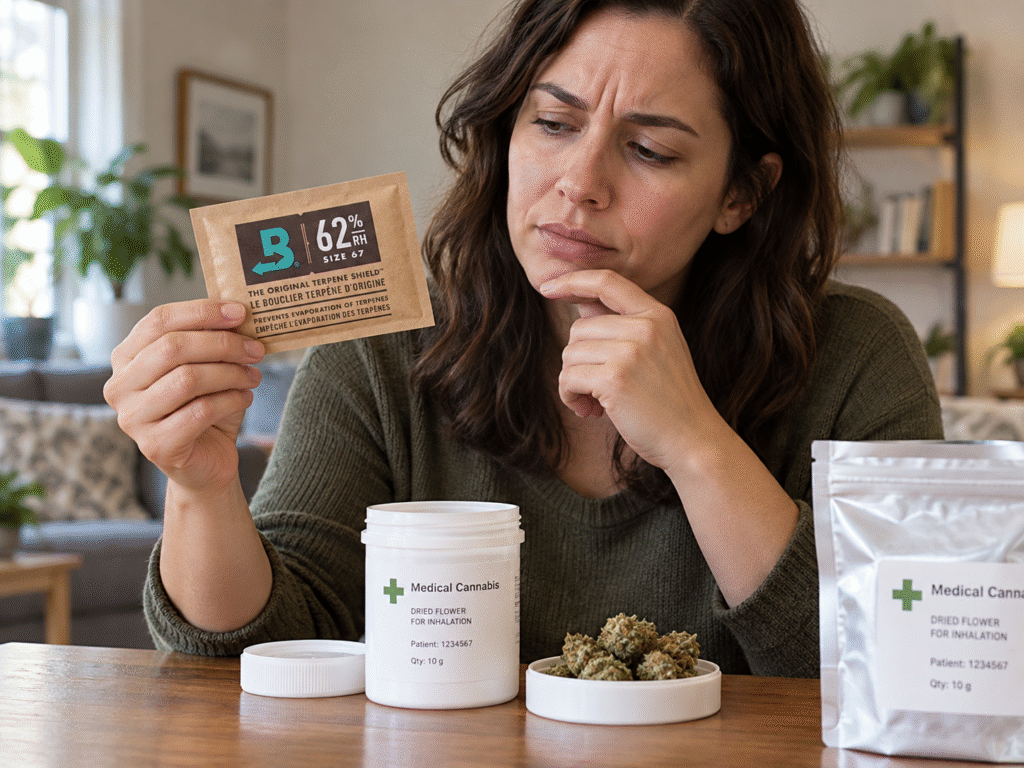
Adding humidity without understanding the starting condition changes that environment.
A quiet aroma at first opening does not necessarily mean the product is “too dry”, it may simply mean the volatile profile has not yet fully expressed itself in the headspace. These are not the same.
Learning to describe cannabis properly
Perhaps one of the more interesting lessons from wine is not decanting at all. It is language.
Wine developed a sophisticated vocabulary because people learned that “red”, “sweet” or “fruity” were not enough to describe what they were experiencing and cannabis is beginning to go through the same process.
Instead of simply saying “citrus”, we might distinguish between, “lemon zest, grapefruit peel, tangerine, bergamot or candied orange”.
Instead of, “earthy”, we might find, “damp soil, forest floor, mushroom, cedar or dried herbs”.
Instead of, “gassy”, perhaps, “diesel, rubber, struck match, garlic, mineral or sulfurous spice” would be more appropriate.
Where we use the term “sweet”, “ripe mango, boiled sweets, vanilla, honey, stone fruit or tropical esters”, may be more descriptive.
This is not (entirely) indulgence. A more precise sensory language may eventually help researchers, manufacturers and patients describe products more consistently. The recent development of a formal cannabis aroma lexicon is an important step in that direction.
Quality is more than the first impression
We often try to reduce cannabis quality to something measurable and immediate.
- THC percentage.
- Terpene percentage.
- Moisture.
- Appearance.
- Initial aroma.
All of these can tell us something, however none tells us everything. The chemistry of aroma alone demonstrates why.
A flower can contain dozens of volatile compounds interacting at concentrations ranging from abundant to almost trace. Some of the molecules that matter most to the nose may barely appear on a conventional analytical report; even then, chemistry is only part of what a person perceives.
That complexity is not an argument against measurement. It is an argument for better measurement, better language and greater humility about what individual metrics can tell us.
Medical cannabis should remain a medicine first, but medicines can still have sensory characteristics, and understanding those characteristics properly can teach us something important about cultivation, post-harvest handling, storage and consistency.
Perhaps the lesson from wine is not that cannabis should be treated like wine, but that complexity deserves patience.
Sometimes the first impression is only the opening note and sometimes, given a little time, there is more there to understand.