Skip to main content

Because not every stage of producing medical cannabis flower should be rushed.
Speed is often treated as a measure of progress.
Faster technology. Faster production. Faster routes to market.
In many parts of cultivation, the ability to respond quickly is genuinely valuable. A plant’s requirements are not static, and our heavily controlled environment gives us the opportunity to make precise adjustments when those requirements change and do so specifically to each strain.
But speed is not automatically synonymous with quality.
There are also points in the process where moving faster can introduce unnecessary heat, physical handling or abrupt changes in moisture. After investing months in cultivating a plant, we see little value in rushing the final stages simply to save a few days.
At Dalgety, our approach is therefore not fast or slow. It is the right pace for the right stage
Before harvest, responsiveness matters
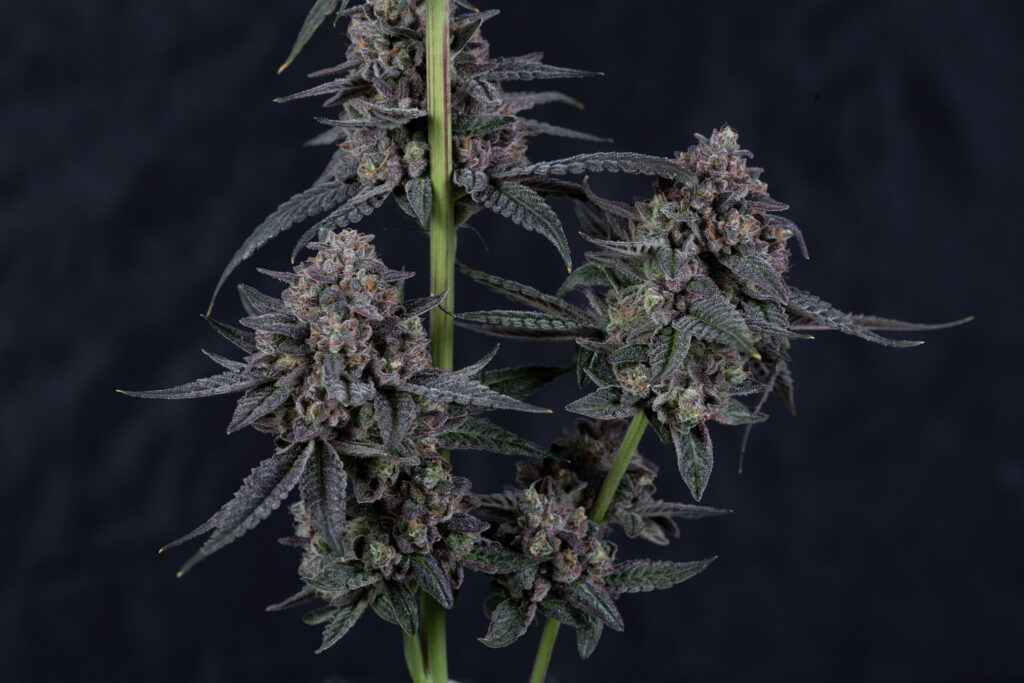
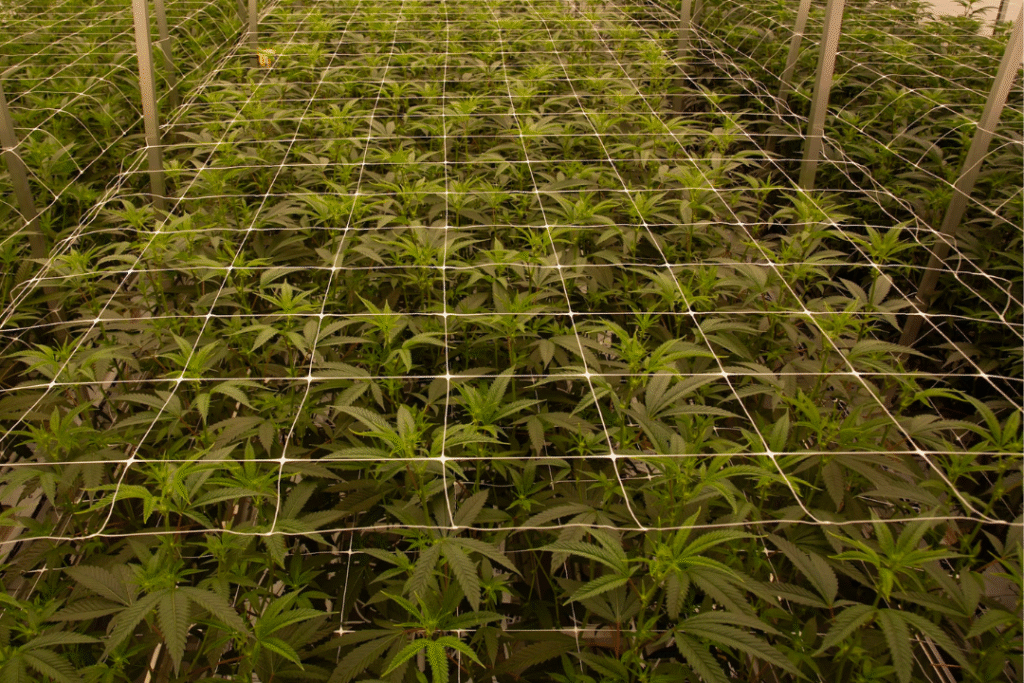
Dalgety plants are grown in purpose-designed horticultural substrate blocks rather than soil.
That is not a criticism of soil-based cultivation. Soil and organic growing media can support excellent horticulture. They are simply different systems, with different strengths and different levels of nutrient buffering.
Our chosen system allows nutrition and irrigation to be delivered through a closely monitored fertigation programme. Instead of relying on the growing medium itself as the principal source of nutrition, we can measure and adjust what is supplied to the root zone when the plants need it and not when they don’t.
That matters because a cannabis plant does not require the same nutritional conditions throughout its life. Nor do all cultivars necessarily use nutrients in precisely the same way.
Recent research comparing two cannabis cultivars found differences in nutrient uptake between them, as well as substantial changes in demand as the plants developed. Nitrogen and potassium uptake were highest early in the vegetative period and then declined, while calcium and magnesium uptake increased over time. The researchers concluded that integrating water-use and tissue data could support cultivar-specific fertigation rather than applying one fixed nutritional programme.
(source: https://pubmed.ncbi.nlm.nih.gov/41658531/)
Other controlled cultivation studies have similarly shown that nutrient concentration, fertigation method, substrate and irrigation management can influence plant growth, nutrient uptake and cannabinoid production.
(source: https://pmc.ncbi.nlm.nih.gov/articles/PMC8635921/)
For us, responsiveness does not mean trying to force plants to grow faster.
It means being able to provide what they need, when they need it and to change course when the evidence tells us that their requirements have changed.
One plant does not equal another
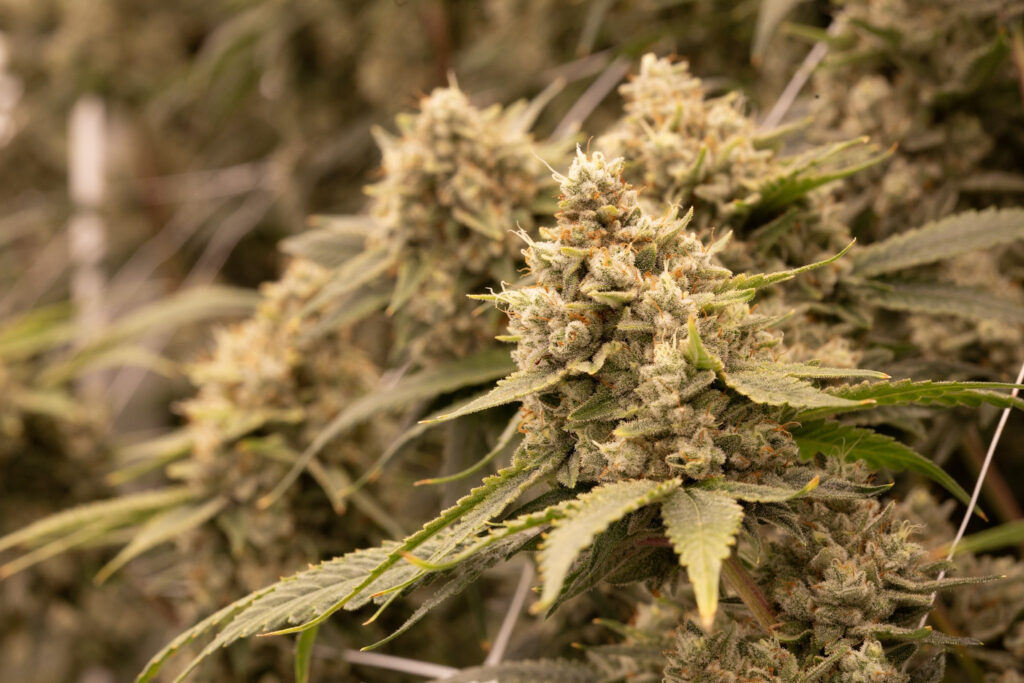
“Cannabis” is often discussed as though it were a single, uniform crop. It is not.
Different cultivars can vary in their physical structure, nutrient requirements, susceptibility to environmental pressures and responses to variables such as light and water availability. Research has reported cultivar-specific responses to mineral nutrition and light spectrum, alongside genotype-dependent responses to water stress.
(source: https://pmc.ncbi.nlm.nih.gov/articles/PMC8725245/)
This is why environmental control matters.
A cultivation system with limited control may have to find conditions that work reasonably well across several different cultivars. That can be operationally practical, but it does not necessarily allow each cultivar to be treated according to its individual characteristics.
At Dalgety, our growing rooms and cultivation programmes allow us to build knowledge around each cultivar separately. We can observe how it responds, refine its environmental and nutritional parameters and use the resulting information to improve the plant’s performance and consistency.
Being able to respond quickly is an advantage here.
At harvest, however, our relationship with time changes.
After harvest, patience becomes part of the process
Post-harvest work is sometimes described as though it were simply a waiting period between cultivation and packaging.
In reality, it is an active and highly controlled part of production.
Moisture is leaving the plant. Volatile compounds may be lost or altered. Microorganisms can be affected by temperature, humidity, airflow and water activity. Physical handling can also affect the structure of the flower.
The European Medicines Agency’s current Good Agricultural and Collection Practice guideline recognises growing, collection and primary processing as connected parts of controlling the quality and consistency of medicinal plant starting materials.
Our drying, curing and trimming process takes more than four weeks and is divided into four distinct stages.
It is not slow for appearance’s sake. Each stage has a purpose.
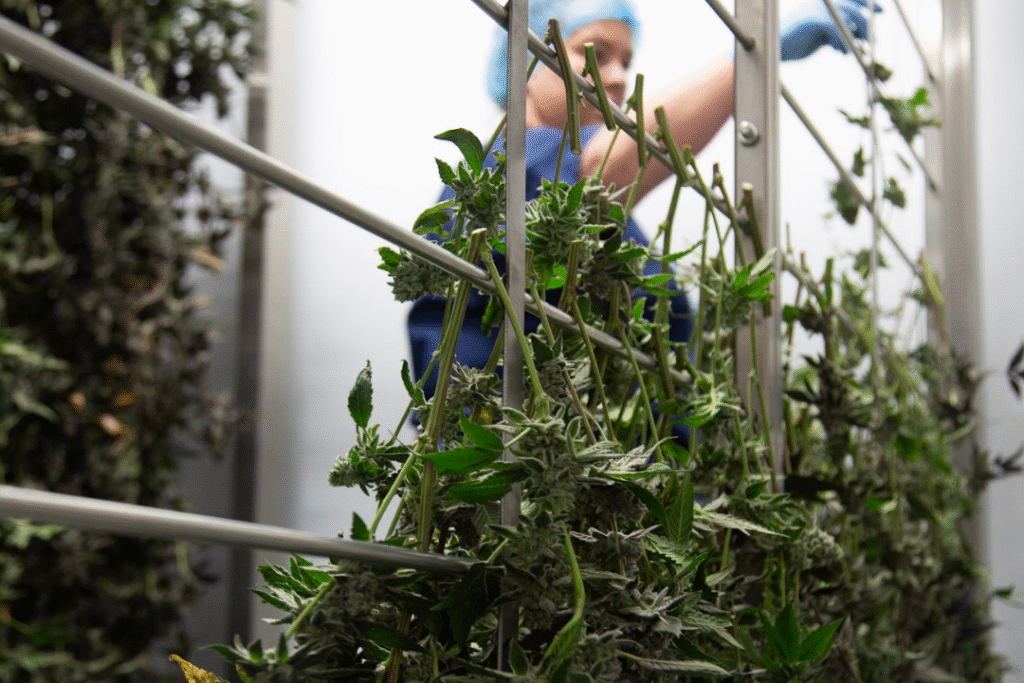
Stage one: hanging the plants
Once harvested, the plants are hung with the flowers untrimmed.
Leaving the material attached to the stems allows moisture to be removed progressively rather than immediately breaking the plant down into smaller individual flowers. Throughout this period, environmental conditions are closely controlled to manage the balance between sufficiently reducing moisture and avoiding conditions that could support unwanted microbial growth.
Slow drying without adequate control would not represent quality. It could create risk.
The important combination is time, measurement and environmental control.
A three-year study involving more than 2,000 cannabis samples found that total yeast and mould levels were influenced by genotype, growing conditions and post-harvest handling. In the samples examined, hang-drying entire inflorescence stems was associated with lower yeast and mould counts than wet trimming followed by rack drying. The study also found that microbial counts generally declined as material reached a sufficiently low moisture content and water activity.
(source: www.frontiersin.org/journals/microbiology/articles/10.3389/fmicb.2023.1192035/)
That does not mean hanging a plant automatically guarantees a microbiologically suitable result. The study itself makes clear that temperature, humidity, airflow, genotype, handling and the extent of drying all interact.
It does, however, reinforce why drying should be treated as a controlled process rather than simply a race to remove water.
Changes are also taking place within the plant material itself. Research into cannabis drying has observed a reduction in greenness consistent with the degradation of chlorophyll during drying. However, the detailed chemistry of cannabis curing remains less comprehensively studied than some traditional industry explanations might suggest.
(source: https://pmc.ncbi.nlm.nih.gov/articles/PMC11821007/)
We therefore avoid relying on folklore alone.
We monitor the material and move forward when defined conditions have been reached.
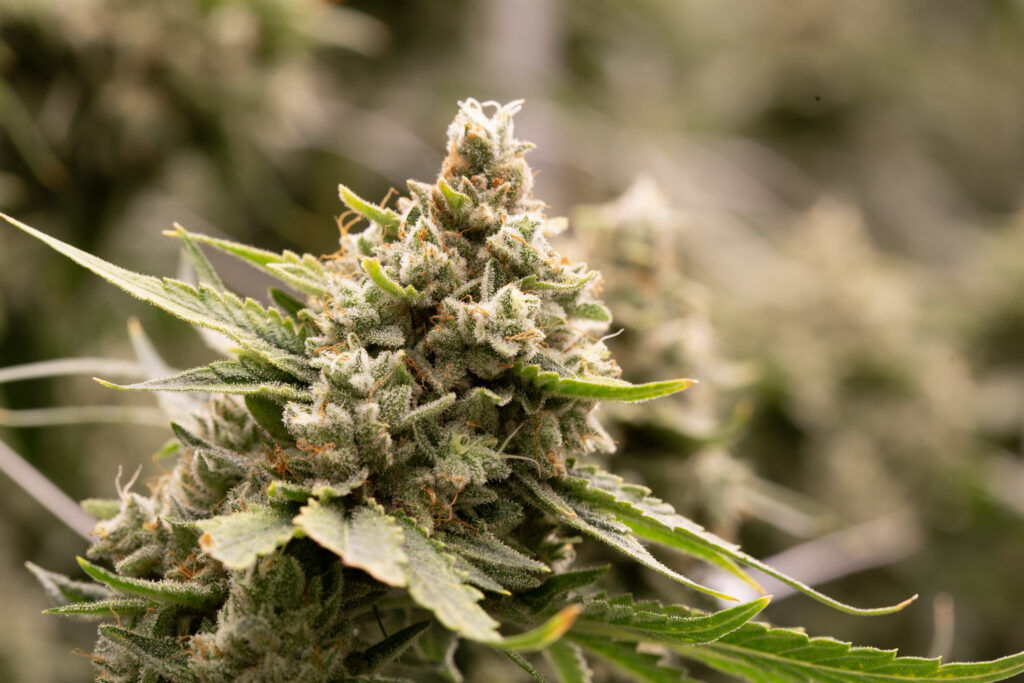
Stage two: the first cure
When the plants reach the specified water content, they enter their first curing phase while remaining untrimmed.
This is an important distinction.
We do not decide that a plant is ready simply because a predetermined number of days has passed. Time provides the opportunity for the process to take place, but measurement determines when the material progresses.
Moisture content tells us how much water is present in the material. Water activity provides different information: it helps indicate how much of that water is available to support chemical or microbial activity.
The two measurements are related, but they are not interchangeable…
In the post-harvest study cited above, drying to lower moisture content and water activity was inversely associated with yeast and mould counts. This illustrates why the condition of the material, not just the calendar, must guide the process.
(source: www.frontiersin.org/journals/microbiology/articles/10.3389/fmicb.2023.1192035/)
The first cure also gives moisture within the flower time to redistribute more evenly. A flower can feel dry at its surface while retaining greater moisture internally, particularly where its structure is dense.
We slow the process down because moisture does not always move evenly or instantly.
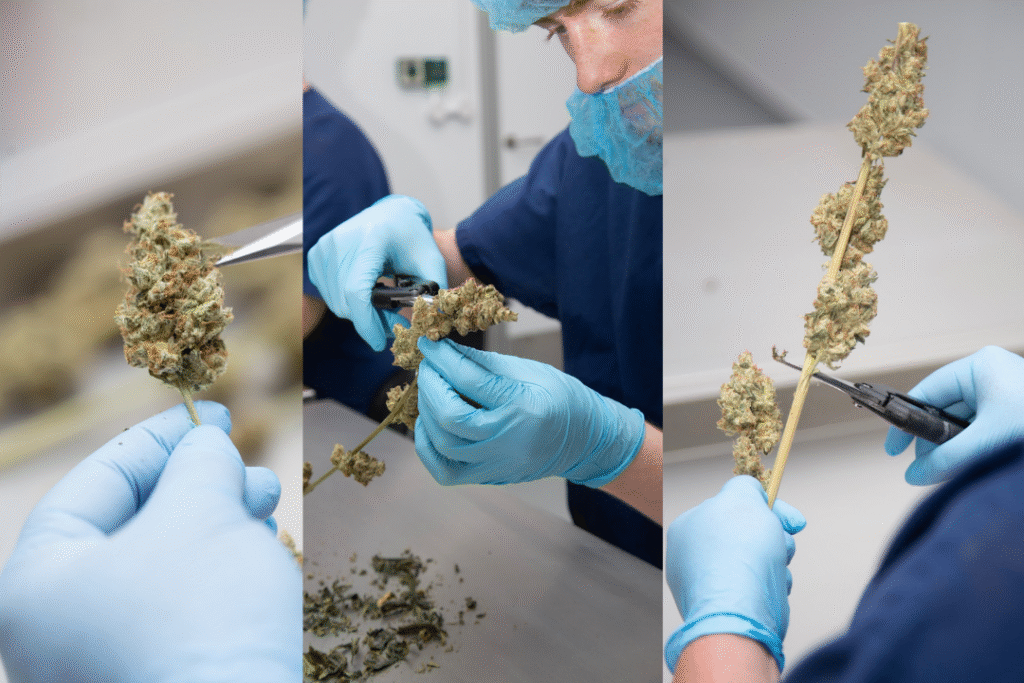
Stage three: hand trimming
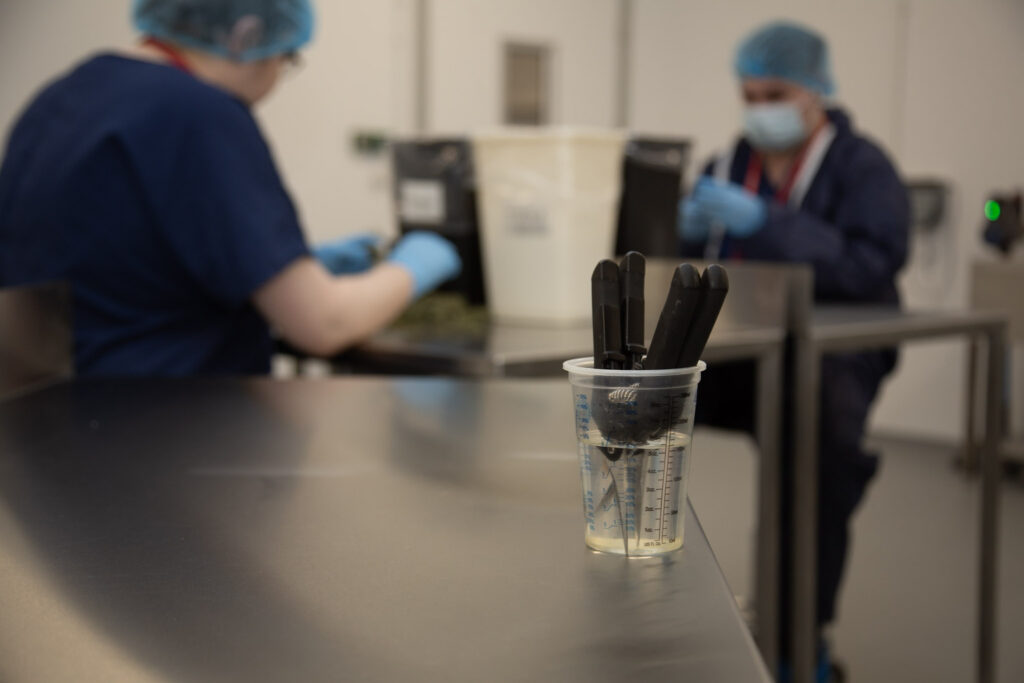
Once the correct moisture conditions have been reached, the flowers are removed from the stems and trimmed individually by hand, while ensuring that only the stems are touched. Our mantra is that the first person to touch the flowers should be the patient.
There is no hiding from the practical reality. Hand trimming is slower and more expensive than mechanical trimming.
It requires trained people to examine and handle each stem. A machine can process considerably greater volumes in much less time. But efficiency is not the only consideration.
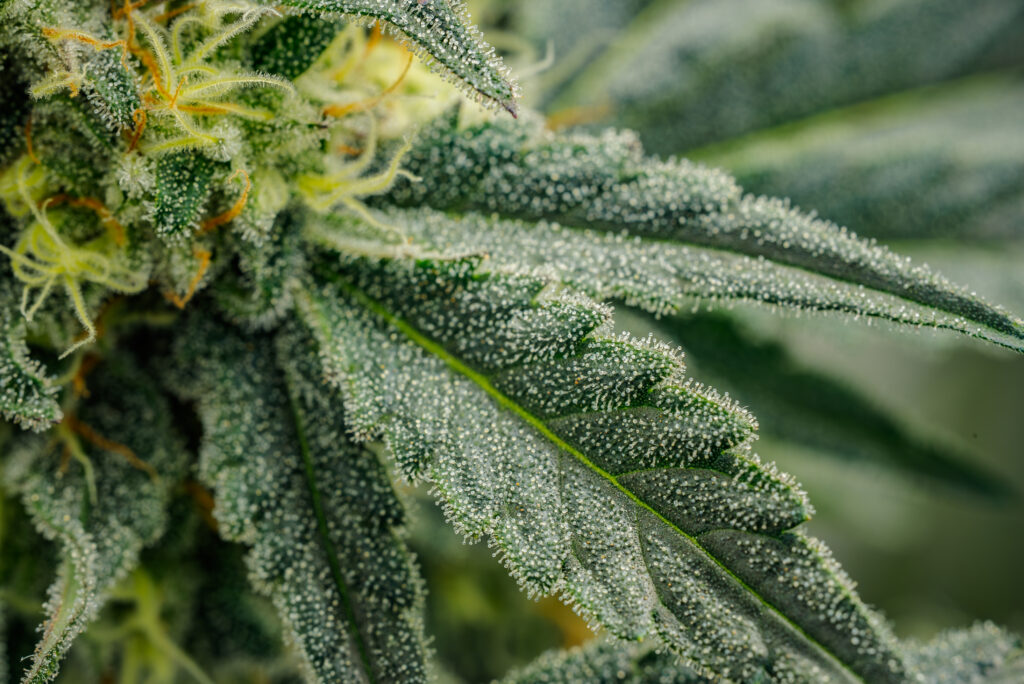
Cannabinoids and many aromatic compounds are produced and stored within glandular trichomes found across the flower’s surface. These structures can be physically disturbed during handling.
One peer-reviewed study used microscopy to compare commercially dried, hand-trimmed and machine-trimmed samples of the same cannabis genotype. The hand-trimmed sample contained a greater proportion of intact glandular heads, while the machine-trimmed sample showed more detached, broken or shrivelled heads.
(source: https://pmc.ncbi.nlm.nih.gov/articles/PMC10071647/)
It is important not to overstate what that research proves. It examined one genotype and does not establish that every trimming machine, setting or process will produce an identical result.
It does, however, support the basic principle behind our approach, that greater mechanical handling has the potential to affect delicate structures on the flower.
We choose hand trimming because it allows our team to work carefully around the shape and structure of each flower rather than forcing every cultivar through the same mechanical process.
The fact that it takes longer is not the objective. It is the consequence of choosing a more hands-on process.
Stage four: the final cure
Following trimming, the flower enters a further controlled curing stage.
During this period, moisture continues to equilibrate and the flower is monitored under defined environmental conditions. The process includes controlled exchanges of air to manage the environment surrounding the flower.
This should not be misunderstood as meaning that more exposure to air is necessarily better.
Terpenes and other volatile organic compounds can be lost through evaporation, degradation and oxidation. Drying and storage studies demonstrate that temperature, atmosphere, duration and packaging conditions can all change the final volatile profile.
(source: https://pmc.ncbi.nlm.nih.gov/articles/PMC7466297/)
Air exchange must therefore be deliberate rather than indiscriminate.
Our objective is to manage moisture consistently while avoiding unnecessary heat and exposure. As with the first cure, the process is not governed by time alone. It is governed by the measured condition of the flower.
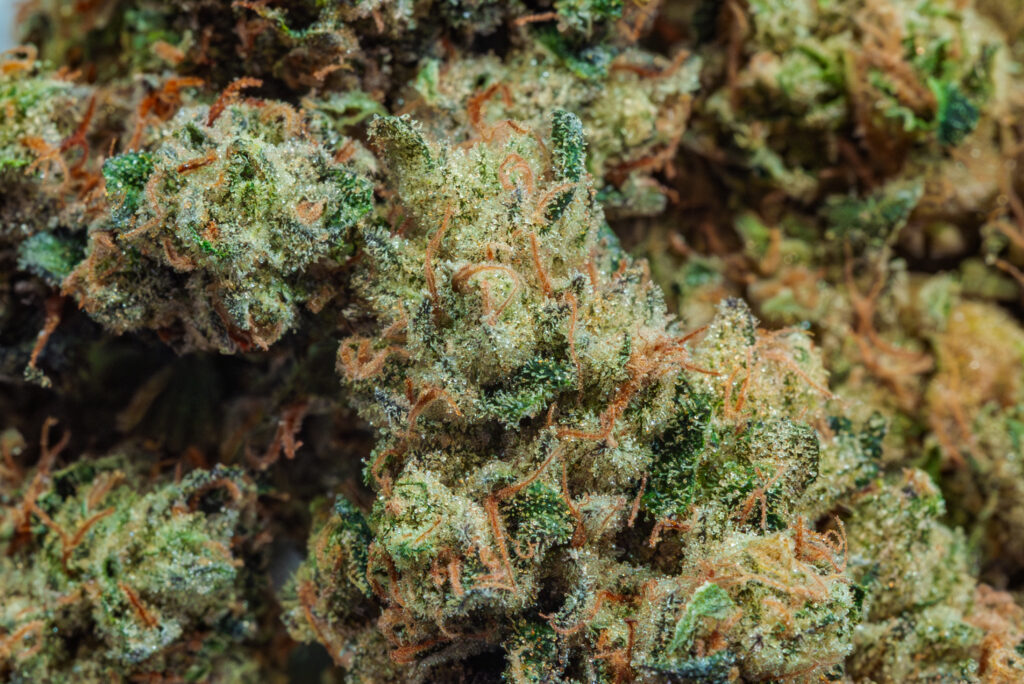
Why we do not speed up the drying process
Freeze-drying is sometimes presented either as a revolutionary answer to post-harvest processing or as evidence that a producer does not respect the plant.
Neither position reflects the full evidence.
Freeze-drying is a legitimate post-harvest technology. Some research has found that it can retain cannabinoids and, under certain conditions, preserve more total terpenes than heated drying methods. Other research has found that it can change the volatile profile or result in losses of aroma-related compounds.
(source: https://pmc.ncbi.nlm.nih.gov/articles/PMC10056619/)
There is also evidence that faster, carefully controlled technologies, including controlled-atmosphere and microwave-assisted systems, can reduce drying time while retaining substantial portions of the cannabinoid and terpene profile. The results can differ by cultivar, compound, temperature and atmospheric conditions.
(source: https://pmc.ncbi.nlm.nih.gov/articles/PMC10874826/)
This is why we would not claim that a slower process is scientifically superior in every conceivable circumstance. The research does not support such a simplistic conclusion.
What it does show is that the chosen drying method matters, that different compounds respond differently and that the outcome depends on much more than processing time alone.
Dalgety has chosen not to freeze-dry its flower, or use any other expedited process. Our approach is a controlled hang-dry followed by staged curing and hand trimming.
It is the process we have developed around our facility, our cultivars and the characteristics we want to protect.
Craft is not the opposite of technology
It can be tempting to divide cultivation into two competing camps.
- Technology or tradition.
- Efficiency or craft.
- Science or experience.
We do not see it that way.
Technology allows us to monitor environments, measure plant responses, manage irrigation and create repeatable conditions. Experienced people notice subtle changes, understand individual cultivars and handle the flower with care.
The strongest process brings those things together.
Our post-harvest approach may be described as “low and slow”, but it is not passive. It depends upon controlled rooms, defined parameters, trained teams, measurements and documented decisions.
It is not about waiting for the sake of waiting. It is about knowing when the product is ready for the next stage.
The right pace for the right purpose
Before harvest, the ability to respond quickly helps us adapt nutrition and environmental conditions around the needs of the plant.
After harvest, moving too quickly could introduce handling, heat or moisture changes that do not align with our chosen process.
So, when some go fast, we go slow. Not because slow automatically means better. Not because we are resistant to new technology and not because taking longer makes a process more authentic.
We go slowly because our flowers are hung untrimmed, cured in two stages and individually trimmed by hand. Those choices require time.
The pace is not the claim. The process is and after spending months carefully cultivating a plant, we believe its final stages deserve just as much attention as its first.